
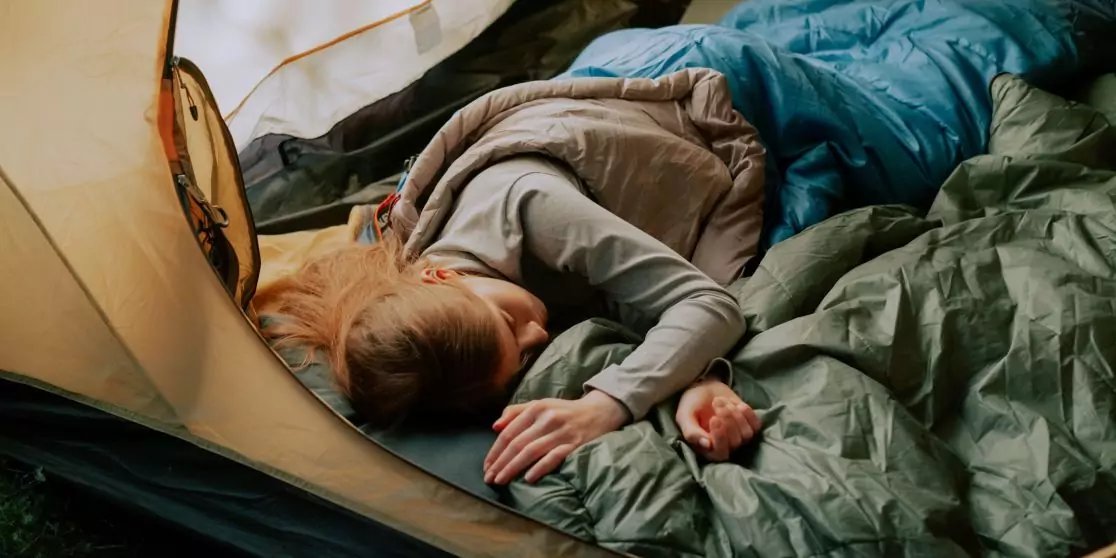

Restful sleep in a tent
How to optimise your sleep quality
A holiday in a tent - that's pure freedom for many. Especially children enjoy such an "adventure". Adults are more likely to have concerns about the quality of their sleep. That's why I'll tell you here how you can get the best sleep even on a camping holiday.
Table of contents
Selection of the Pitch/Plot
Before I delve deeper, I'll start with something basic. You can influence the quality of your sleep right before your holiday by being strategic when choosing your desired campsite, plot or tent pitch. So find out about the local conditions in advance.
Bear in mind, for example, that plots on busy thoroughfares can be noisier. Tent meadows don't often have electricity, so there's a good chance you won't be disturbed by buzzing electrical appliances. You can also take a closer look at the site rules and the quiet hours. This varies from campsite to campsite. On some campsites you will even find quiet zones where special emphasis is placed on relaxation.
Can the tent influence the quality of sleep?
The tent is your mobile home. So think carefully about what is particularly important to you when camping. Of course, the requirements that campers place on their tents vary greatly and often depend on budget. However, if you place a lot of value on high-quality sleep, there are a few points to consider when choosing your tent. Here you’ll find more tips for choosing the perfect tent.
1. Sleeping cabin: If you are sensitive to light, I recommend a tent with a darkened sleeping cabin. This way you can sleep longer in the morning.
Tents with darkened sleeping cabins



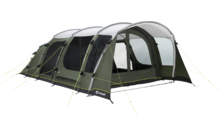
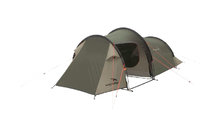
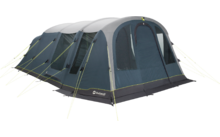
2. Sewn-in base: Protects you from insects entering through the floor, as well as mud and moisture.
3. Mosquito nets: Ensure there is at least a mosquito net on the sleeping cabin. This keeps away annoying bloodsuckers that disturb sleep.
Mosquito nets protect against insects
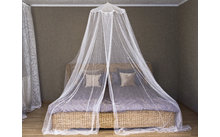
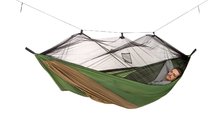

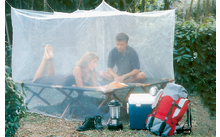
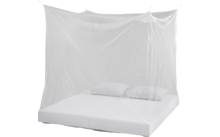
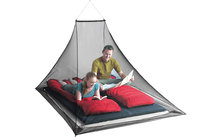
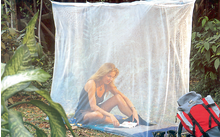
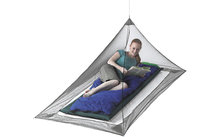
4. Tent fabric: Tents made of cotton or cotton blends ensure a good climate inside, especially when camping in hot regions.
5. Ventilation: Especially in hot temperatures, continuous ventilation is beneficial so cooler air can flow through at night.
6. High water column: The denser the material of your tent, the lower the risk of getting water inside. More on water column ratings can be found here.
The Right Sleeping Pad
Now to an important topic: the sleeping pad. Your sleep quality depends on it. These options are particularly convenient:
Air bed
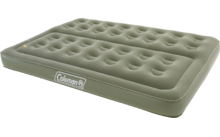
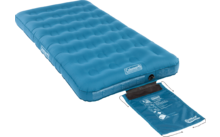
A space-saving and simple option is an air bed. High mattresses, low, double mattresses – available in various styles. Some even have an integrated pump. Air beds are comfortable, but remember that air conducts cold. Tip: place an insulating blanket or mat on top of the mattress. Underneath, it doesn’t help much. Find air beds in the Berger online shop.
Various air beds in the Berger online shop
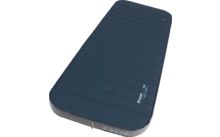

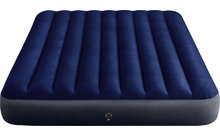

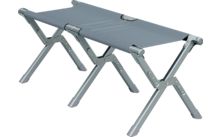
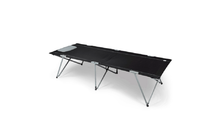
Cot
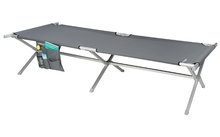
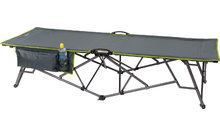
My personal favourite. Sleeping on a cot is almost like at home. Still, I recommend placing an extra insulating mat over it. Some models already include this. Cots require enough space in the car and tent. Some variants are bulky and heavy. Find cots in the Berger online shop.
Cots for camping


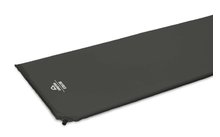
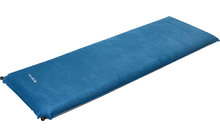
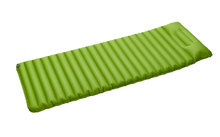
Self-inflating sleeping pad
These are usually light and easy to store, often with a foam core. Choose the thickness and softness depending on preference. Pay attention to insulation. Find self-inflating sleeping pads in the Berger online shop.
Self-inflating sleeping pads

Sleeping Options for Children
Children have the same options as adults and can also snuggle up with their parents. However, here are some special considerations.
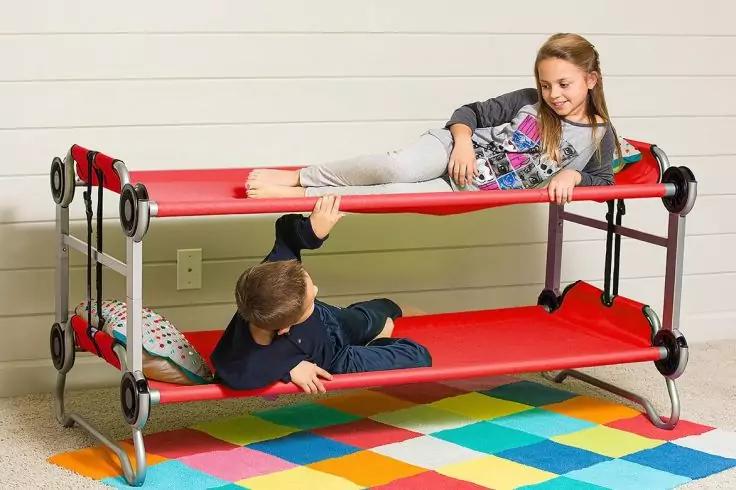
Cots for children
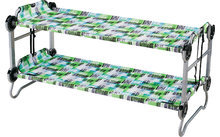
There are special cots for children. They are simply smaller. Disc-O-Bed offers a special design in this category. These cots can stand alone or be set up as bunk beds. This is particularly suitable for smaller tents with standing height. Find Disc-O-Bed children’s bunk beds in the Berger online shop.
Bunk beds for children


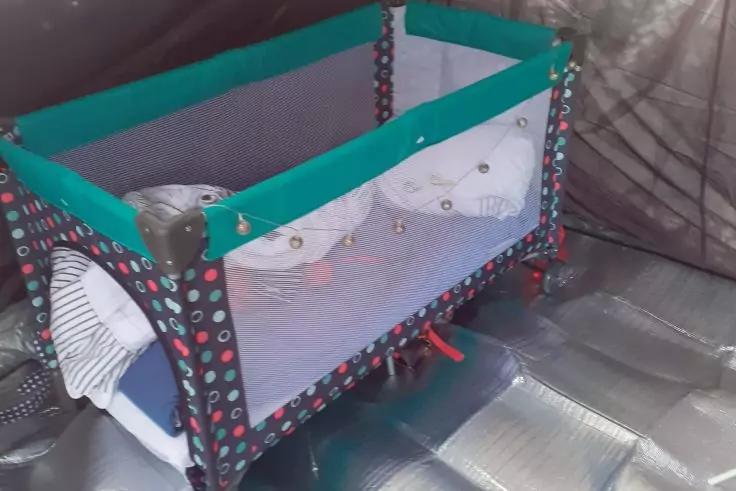
Travel beds
Also suitable for small children. Protected by side walls. You may want a travel mattress and extra insulation.
What You Can Do to Avoid Freezing
The worst is freezing at night when camping. Fortunately, there are many ways to prevent this:
Choose the right sleeping bag
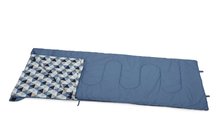
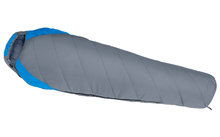
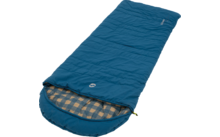
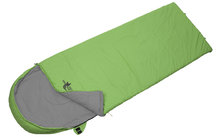
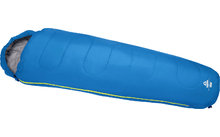
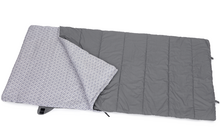
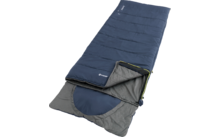
Choosing the right sleeping bag is very important if you want to stay well protected from the cold. Here you’ll find detailed information on how to choose the right sleeping bag. In general, select one with excellent insulation. Always check the comfort temperature rating of the sleeping bag. This refers to the outside temperature at which a woman can sleep comfortably without feeling cold or hot. Those sensitive to cold should select a sleeping bag suitable for lower temperatures. Wear functional underwear or light sleepwear inside the sleeping bag.
A good sleeping bag keeps you warm even at low temperatures
Use a sleeping pad
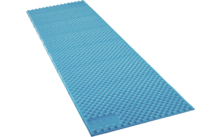
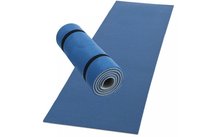
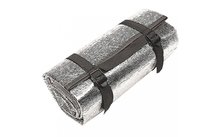
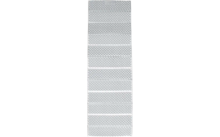
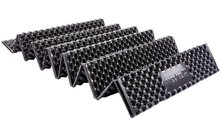
Whether it’s a classic sleeping pad, self-inflating pad or insulated blanket, all prevent cold from seeping through. Differences exist. If you get cold easily, choose a pad with a high R-value, which indicates how well the pad insulates.
Insulating mats


Pre-warm with electric blanket or hot water bottle
A pre-warmed sleeping bag is a great tip for starting a cool night. If electricity is available, an electric blanket or heating pad is recommended. Make sure there is overheating protection and switch it on shortly before sleeping. Alternatively, fill one or more hot water bottles with hot water.
Put on a beanie
Although the myth says most heat is lost through the head, it’s still recommended to wear a hat at night in cold conditions. The head and face are particularly temperature-sensitive, with many nerve endings.
Use a fur underlay
Furs were historically used as sleeping pads. Even today some campers swear by them. Usually sheepskin or reindeer fur is recommended. It’s soft and warm, but due to weight and size, it’s only partially suitable for camping. Ethical reasons may also speak against it.
Use a heating device
If you are particularly cold, you can use a heating device temporarily. Electricity or gas is required. Gas heaters require adequate ventilation, so I personally don’t recommend them. Electric heaters should have tip-over and overheating protection. These are not a permanent solution but can help warm you before sleep and make morning dressing more comfortable. Here you can find ceramic fan heaters and mobile camping heaters in the Berger online shop.
Eat a healthy meal
It’s understandable to have a beer in the evening, but if it’s cold, better avoid alcohol. Alcohol accelerates body cooling. Instead, enjoy a warm tea and a balanced meal. Being satisfied keeps you warmer.
What You Can Do to Avoid Sweating
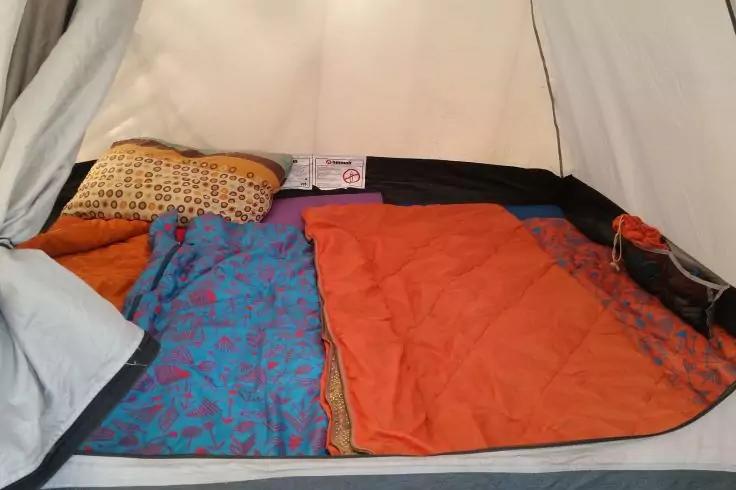
Heat in the tent cannot be completely avoided on hot nights. But here are some tips to make the best of it:
- Use light blankets or a summer sleeping bag
- Use a fan (may require electricity and produce some noise)
- Get up early, because the tent heats up quickly in the morning
- Take a lukewarm shower before sleep
More Tips for Better Sleep Quality
- Use pillows: Camping pillows are compact and less likely to get damp.
- Use a sleeping mask: Helpful if your tent doesn’t have a darkened sleeping cabin.
- Use earplugs: Campsites can be noisy, and tent walls don’t block sound.
- Don’t stay up too late: Life on the campsite often starts early. To be fit the next day, don’t stay awake too long.
- Exercise during the day: Being active helps you sleep better at night.
Conclusion: Listen to Your Gut!
There are many ways to ensure good sleeping conditions when camping. Consider in advance what transport options you have and how much space is available in your tent. This allows you to narrow down your choices.
Ultimately, you need to trust your gut and test things out. You might also visit a store, where you can see and try out inflated air mattresses.
Don’t worry if you’re not fully satisfied with your equipment the first time. Every camper learns gradually, and you too can optimise your setup until you are happy with your sleeping situation.