
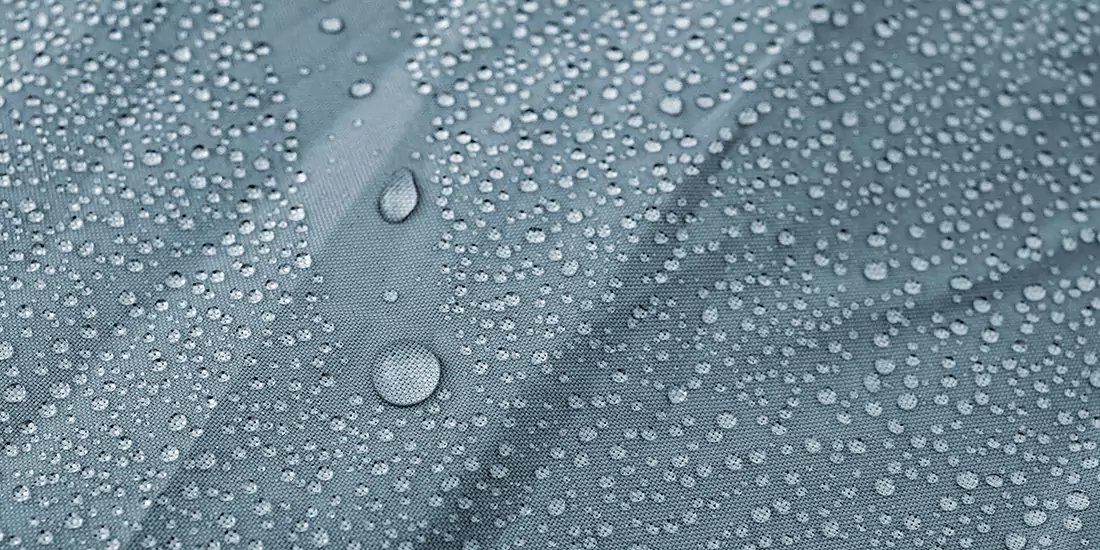

What does the water column mean for a tent?
When is a tent waterproof?
If you are looking for a new tent, you will sooner or later come across the term "water column". But what is it all about and what water column should your tent have? We will help you.
Table of contents
What is the Water Column?
Generally speaking, the water column shows you how well your tent is prepared for rain. This is because the water column is a key figure that indicates how long a material can withstand until water penetrates. The unit of the water column is millimetres. But how do millimetres relate to waterproofness?
Not every material is labelled with water column information. This includes cotton blend fabrics. However, this does not of course mean that this fabric is permeable to water.
To determine the water column of a material, a cylinder filled with water is placed on the tent material. Then the pressure acting on the material until it lets the water through is measured. This resistance is not given in bar for the water column, but in millimetres. The millimetres correspond to the pressure that would arise if a correspondingly high water column were to act on the material.
Example: A water column of 3,000 millimetres corresponds to the water pressure at a depth of three metres. So if you buy a tent with a water column of 3,000 millimetres, the tent material would still be waterproof even if the tent were standing at a depth of three metres and the water were pressing on the tent walls.
The water column is not determined according to uniform standards. For example, the US test is considered tougher because the water column is determined based on five years of use of the product. In Europe, an estimate of the water column is made for new articles.
When is My Tent "Waterproof"?
In Germany, there is a DIN standard that defines waterproofness. It specifies that a material is considered waterproof if it has a water column of 1,500 millimetres. However, the standard works with a lower limit here. If your tent is exposed to heavy rain for several days, this water column will not be sufficient to guarantee waterproofness.
A water column of at least 3,000 millimetres is recommended when buying a tent. It is important that the groundsheet also has at least this value. The groundsheet is particularly exposed to water pressure and should ideally have a water column of 5,000 millimetres.
Water Column Alone is Not Decisive
When buying tents or outdoor clothing, many people think that the highest possible water column is the best protection against rain. However, the water column is only one possible value to judge rain protection.
The following are also important:
- the material of the outer and inner tent: for example, a cotton tent may well be waterproof, even if no water column is specified.
- the material of the groundsheet
- the tightness of the seams
- the tightness of the zip fasteners

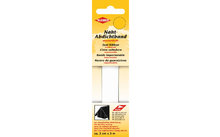
We recommend using seam sealant for tents to increase waterproofness. This is because the water column only applies to the material surfaces and says nothing about the seams or zips. In addition, the resistance of the material can weaken over the years. Therefore, you should regularly impregnate the tent fabric.
We'll show you how in these illustrated step-by-step instructions.


The water column is one of several criteria for selecting a tent with good resistance to water. That's why you should go for tents with a water column of at least 3,000 millimetres. To prevent water penetration, waterproofing spray is just as essential as seam sealant or tent seam sealing tape.

Conclusion: The Water Column Alone is Not Decisive
The water column alone is not decisive, but should not measure less than 3,000 millimetres. It is important that you take good care of your tent so that it can provide you with good protection against water for a long time.