
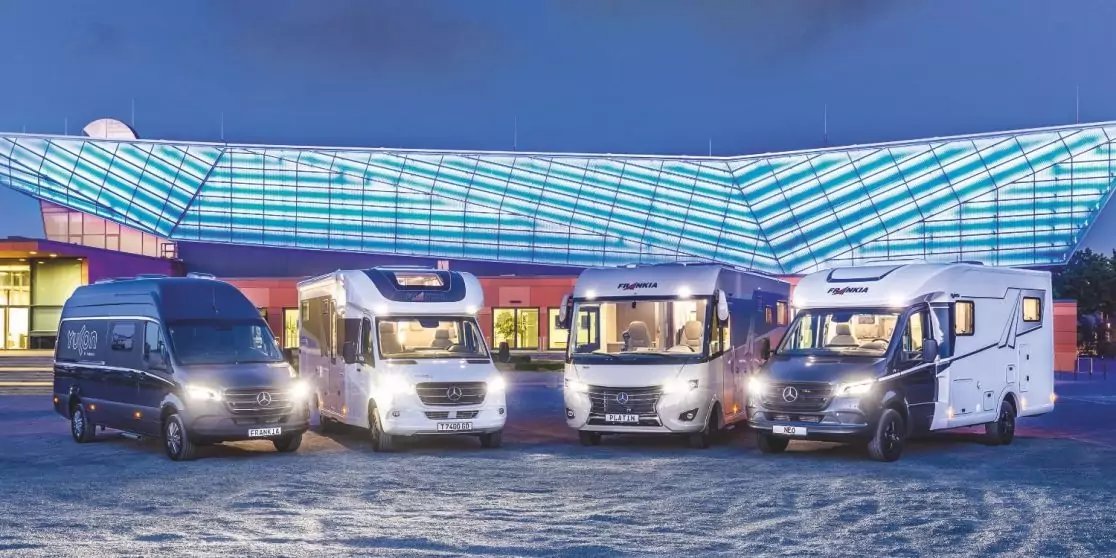

Special features of mobile homes over 3.5 tonnes
Advantages and disadvantages of heavy mobile homes
Are you still unsure whether a mobile home with 3.5 tonnes or a heavier motorhome is right for you? Then this article is just for you. Here, you can discover all the advantages and disadvantages of the different weight classes.
Table of contents
From 3.5 tons, mobile homes are legally considered trucks
The permissible gross weight (GVW) influences many factors when handling a vehicle. From the required driving licence class to practical implications for route planning. 3.5 tons is the magic limit: if your mobile home weighs 3.5 tons or less, you are legally driving a car, while a mobile home over 3.5 tons counts as a truck.
Different driving licences necessary
You may drive mobile homes up to a permissible gross weight of 3.5 tons with a car driving licence (Class B). The dimensions are somewhat larger than a conventional car, but with a little practice you will quickly get used to the new dimensions.
If the GVW is more than 3.5 tons, the mobile home is considered a truck under driving licence law. Then at least Class C1 is required. For driving lessons, theory and the exam, expect costs of around 2,000 euros. In addition, a special eye test by an ophthalmologist is necessary. Since the C1 licence is also valid for commercial goods transport, the course material includes more knowledge than you need for driving a mobile home. Here you can check the C1 licence. Here you can see which licence you need to drive your mobile home.
Observe special traffic rules
For mobile homes up to 3.5 tons, the same rules apply as for passenger cars, except for individual exceptions, such as special parking bans indicated by an additional sign.
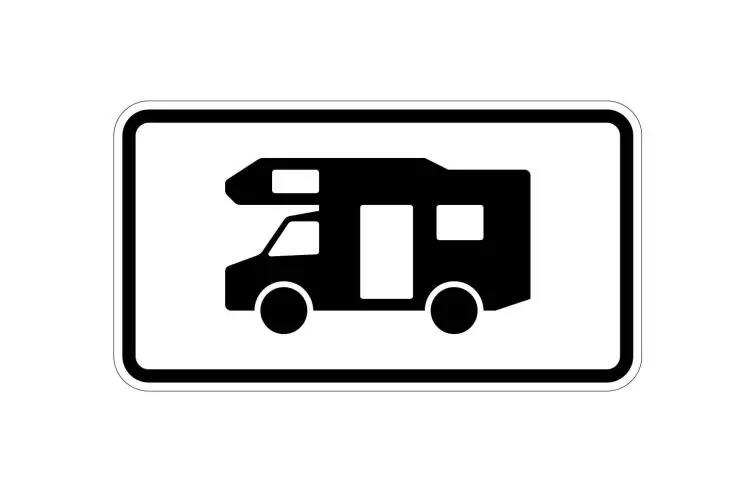
Heavy mobile homes, on the other hand, are subject to truck regulations. In practice, this means: special caution with transit bans, parking bans, speed limits and overtaking bans.
On motorways, heavy mobile homes may drive at 100 km/h, while commercial trucks are limited to 80 km/h.
Due to special route planning requirements, it is recommended to get a navigation device designed for campers. With a GPS specifically for campers, you also reduce the risk of fines. Here you can find everything about camper GPS devices.
Bigger does not necessarily mean heavier
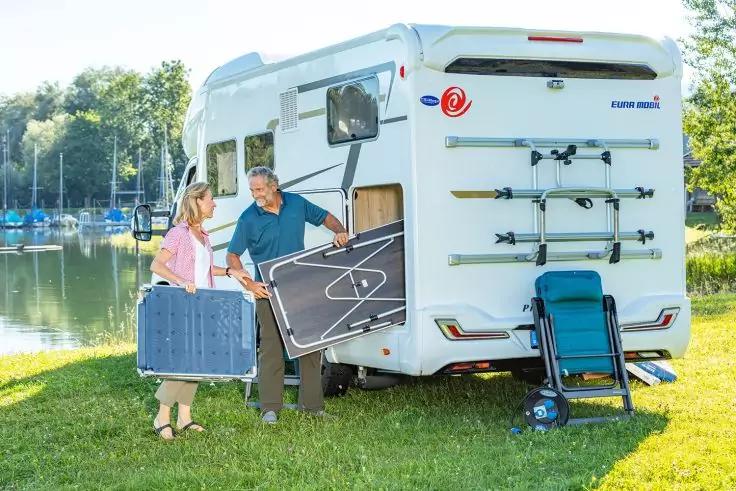
Not all mobile homes grow in size as their weight increases. In some models, you can choose at purchase whether to register the vehicle with 3.5 tons or more. All mobile homes based on the Fiat Ducato Heavy chassis are already prepared for a maximum load of 4.5 tons.
Often, at a certain size, it is advisable to choose a higher weight class. Because in large vehicles, the payload at 3.5 tons GVW is often unrealistically low. More space also means more luggage and accordingly higher payload demand. Therefore, it is reasonable to say: heavier mobile homes offer more storage and living space, but are less manoeuvrable and finding a parking space is more tedious due to their size. Learn how to load your mobile home correctly in this article.
Amount of tolls varies
Toll systems can vary widely between countries. In principle, mobile homes up to 3.5 tons pay less toll than heavier mobile homes, as heavy vehicles are often treated as trucks. For example, in Austria, a sticker vignette is no longer sufficient. Instead, the toll must be electronically recorded by kilometre. Note that you must purchase the electronic toll box before entering a toll road.
Here you can find everything about different toll systems in Europe.
At a glance: advantages and disadvantages of truck registration
| up to 3.5 tons | over 3.5 tons |
| + Traffic rules as for cars | - Transit bans and speed limits for trucks |
| + Some vehicles more compact and manoeuvrable | + More living space in large vehicles |
| + Car licence sufficient | - At least C1 licence required |
| + Car toll in some countries | - Higher tolls |
| - Less payload | + More payload |
Conclusion: set priorities
Heavy mobile homes impose greater restrictions on road traffic. On the other hand, they offer more load reserves and a more comfortable living space. Only you can decide whether comfort or handling is more important. However, there are cases where a load increase above 3.5 tons is highly recommended. For example, if a scooter or motorbike is to ride in the rear garage, 150 kilograms of payload are quickly lost.
Also note that most mobile homes can be retrofitted with a higher load capacity. So you can buy a large integrated mobile home with a GVW of 3.5 tons and drive it as a car. If the payload turns out too low, you can upgrade the load later.